
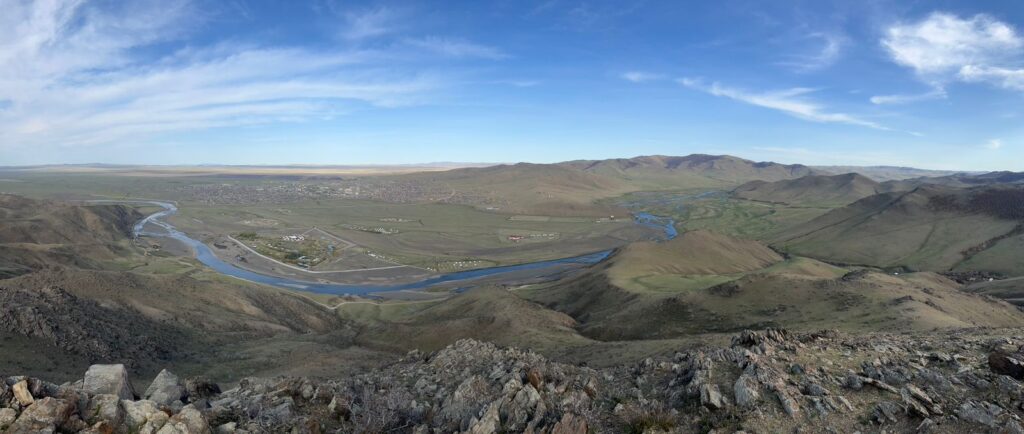
Perhaps the one word that best encapsulates the Gobi Desert is vast. Traversing the southern region of Mongolia and northern China, this desert covers just under 1.3 million square kilometers, making it the 6th largest desert in the world. Flowing creeks and dry creek beds, stunning cliffs, deep rocky canyons, colorful desert flowers, and open grasslands are just some of the impressive features of this spectacular region. Here, you can climb the stunning Khongoryn Els Sand Dunes that rise up from a small wetland and spread for miles. They are also known as the Singing Sands. If you are there on a windy day, listen closely, as the sand is said to produce a unique humming sound when it shifts in heavy winds.
Visit the site where the first dinosaur eggs were ever discovered by man – the stunning Flaming Cliffs. This unique and beautiful geographic feature is named for the sandstone pillars that turn a deep red at sunset. Walk the short trails that meander above and through the formations. Visit the small visitor center to learn about the site’s history, wildlife, and geology.
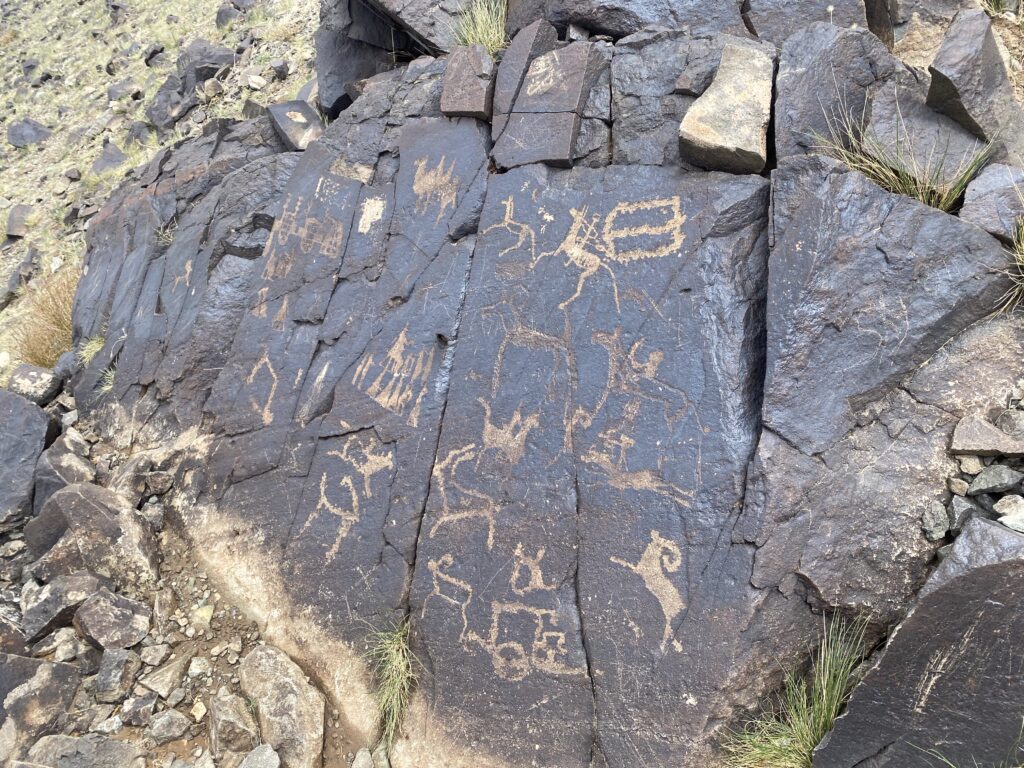
Yurts and stone enclosures – home to nomad families and their livestock – dot the open grasslands. Carved images on petroglyphps and deer stones mark sacred sites. Temples, stupas, and monasteries are important cultural sites. They provide space for worship and meditation, residences for monks and nuns, and sanctuaries for housing important relics, art, and statues.
Of course, for nature lovers, one of the main attractions here are the birds and other wildlife that call this desert home. Biologists have recorded over 500 bird species in Mongolia, with approximately 150 of those found in the Gobi. Roughly 50 species of mammals and 20 reptile live here.
Birds of the Gobi
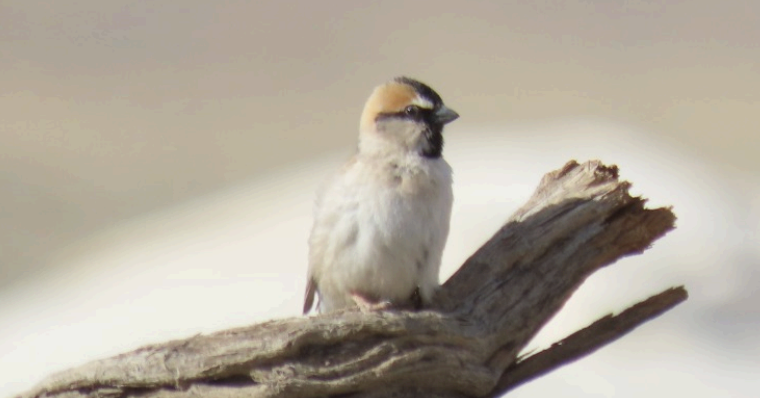
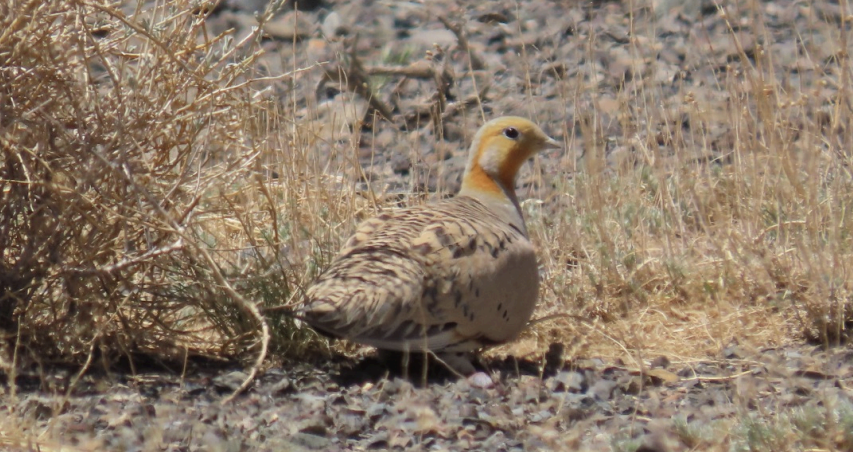
The Gobi Desert’s small ponds, springs, dotted tree stands, and robust bushes attract and provide a safe haven for resident and migratory bird species alike. The Mongolian Ground Jay is one of the most iconic birds of the Gobi. Mongolian Lark, Saxaul Sparrow, White-winged Snowfinch, Desert Wheatear, Red-throated Thrush, and Pallas’ Sandgrouse are some of the other incredible birds surviving in this harsh environment. The subtle beauty of their muted colors helps them blend in with their surroundings – an important adaptation to keep them safe from predators. Of course, it makes seeing them even more thrilling as they seem to essentially appear from thin air when you suddenly spot a subtle movement that turns what was once bare ground into a bird!
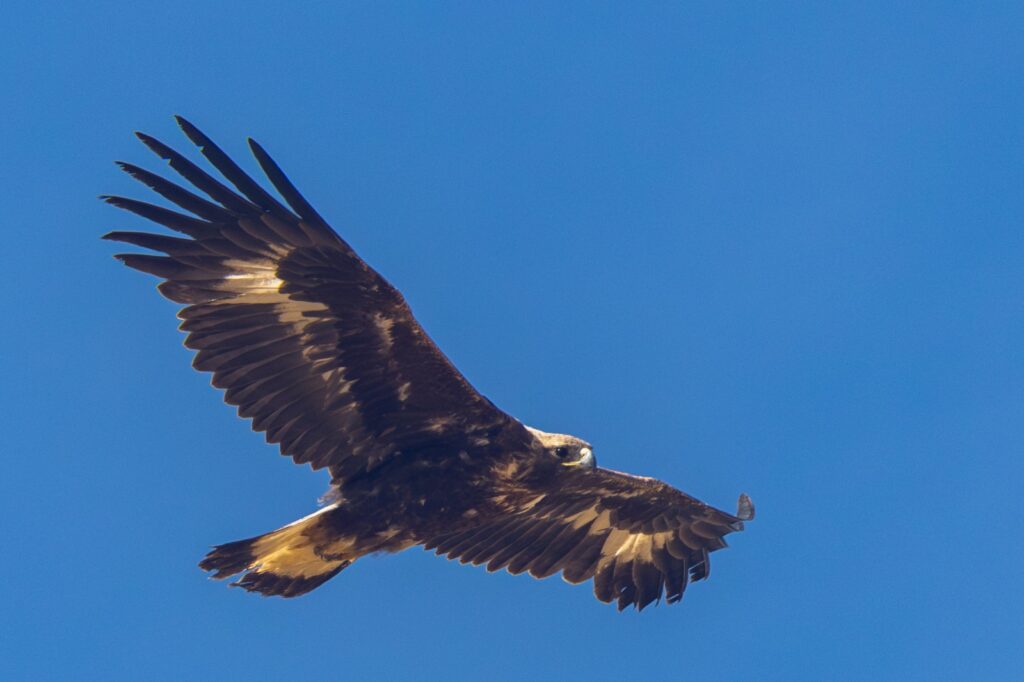
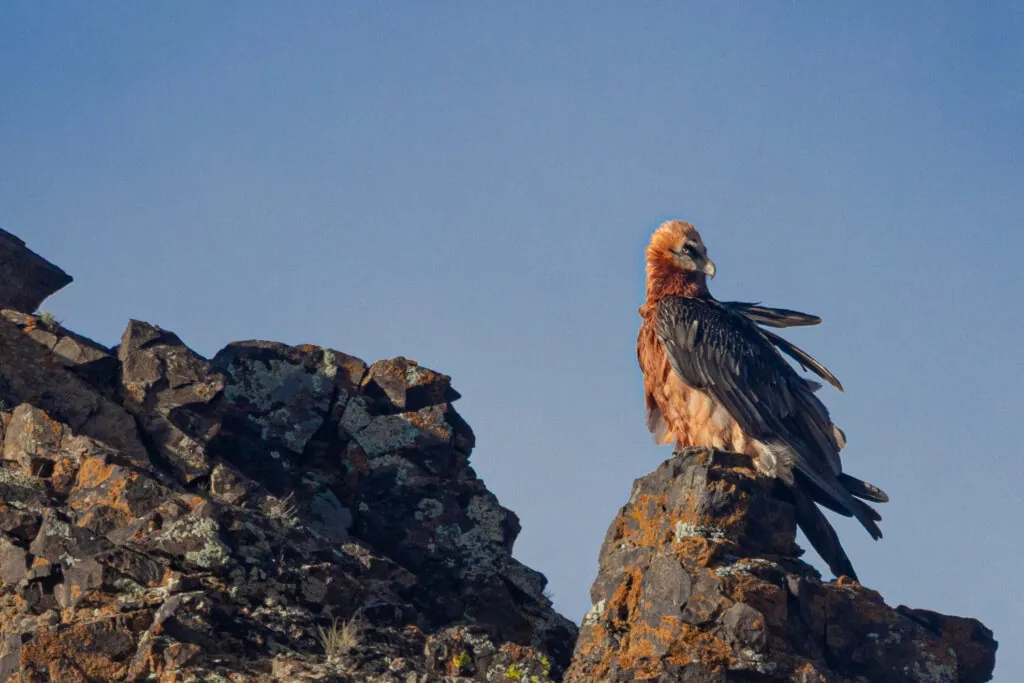
Waterways attract aquatic and aquatic-adjacent loving birds, including White-naped and Demoiselle cranes, Tundra and Whooper swans, Arctic Loon, Tufted Duck, Great Crested and Eared Grebes, Gray Heron, and more. This is also a fabulous place to observe birds of prey. Seek out the Saker Falcons (Mongolia’s national bird) and Bearded Vultures perched on rocky outcroppings. Search the skies for Himalyan Griffons and Golden Eagles soaring high overhead. A hike to a tall peak might reveal the large nest of a Cinereous Vulture below. Upland and Long-legged Buzzards, harriers, and of course, the ubiquitous Black Kite all make their home here.
Mammals of the Gobi
Roughly 50 species of mammals, big and small, live throughout the Gobi. Some of the rarest mammals, such as the Gobi Bear and Wild Bactrian Camel, live only in small areas of this incredible desert scape and are extremely hard to find. The estimated population of the Gobi Bear hovers at around 40 individuals, so spotting this rare bear is unlikely.
While domestic Bactrian camels are common throughout the region – providing milk and fur to local nomad families – their wild cousins are much harder to find. Scientists estimate the world population to be less than 1,000 individuals. In Mongolia, a small population lives only in a protected area within the Gobi. Apart from providing important habitat for these rare and endangered species, the Gobi is home to other fantastic mammals of all kinds, that are much easier to observe.
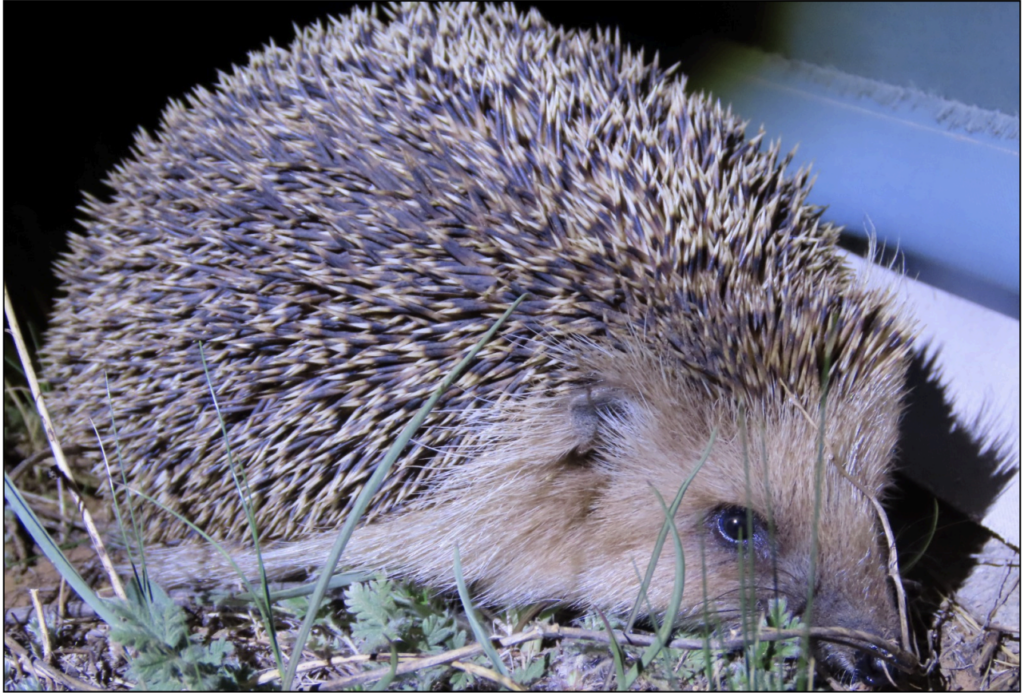
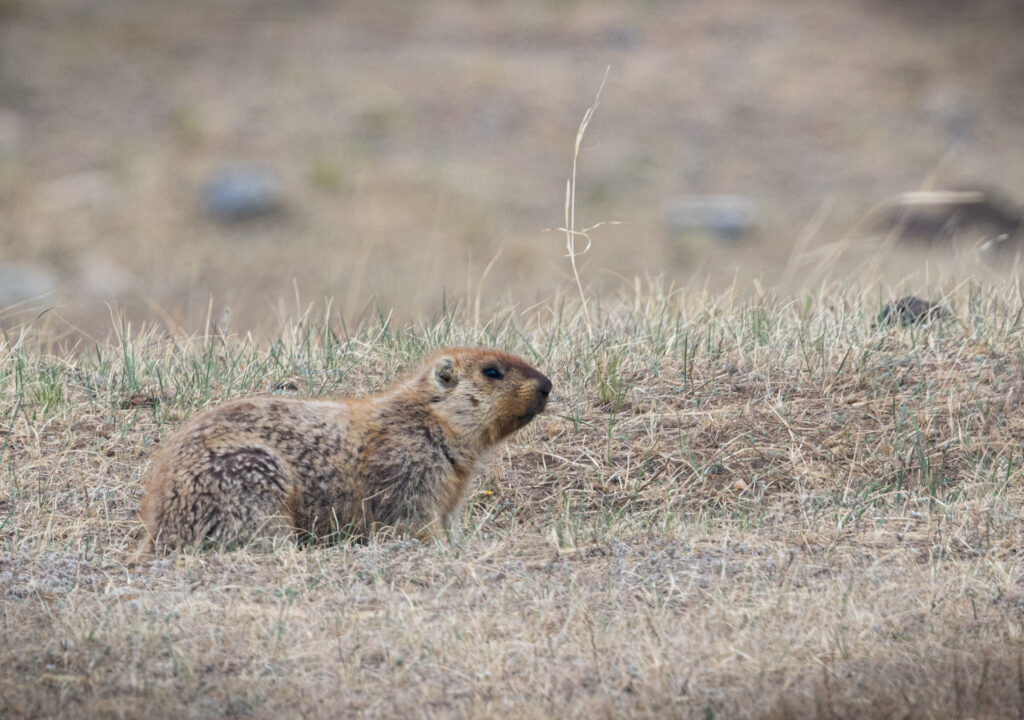
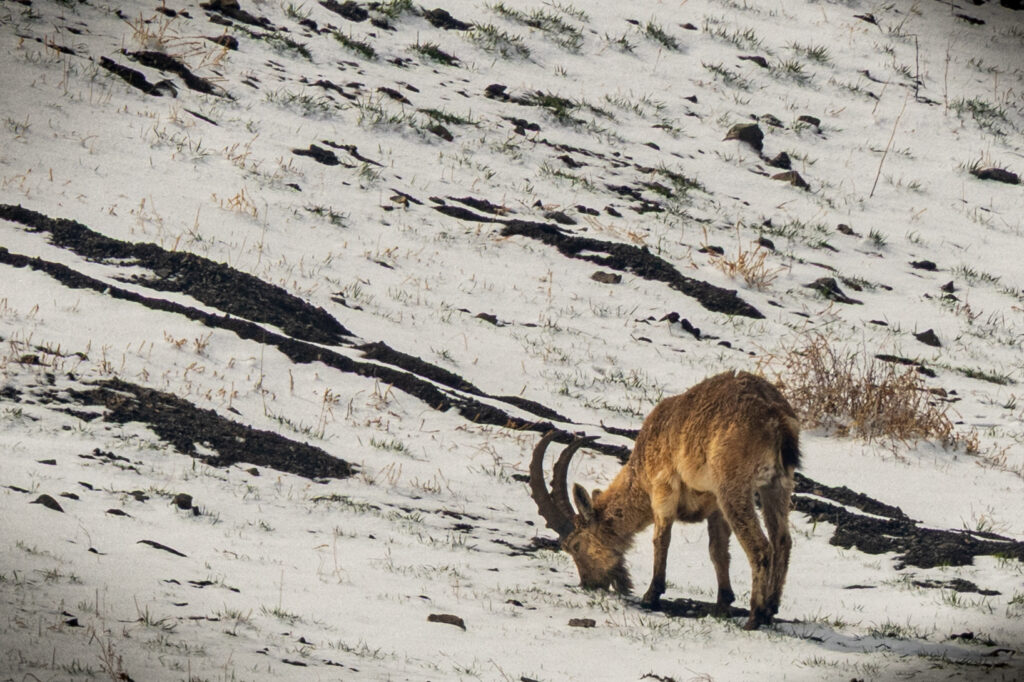
Ungulates abound here. Siberian Ibex roam the hills. The males, in particular, impress with their ornate, curved horns. Mongolian Wild Ass, Goitered (Black-tailed) and Mongolian gazelles roam the open steppes. Some of the most impressive are the Argali (sheep), due to their ability to climb impossibly steep mountains and narrow ledges. Small mammals seem plentiful as well. And these are perhaps even more exciting to see! On a trip to this amazing destination, you may spot several species of ground-squirrels, voles, pikas, gerbils, hamsters, and hares during the day. Siberian marmots inhabit the edges of the Gobi desert. Some of the cutest small mammals include Mongolian Five-toed (Siberian) Jerboa, and the Hairy-Footed Jerboa. These take a little more effort to find and often require venturing out at night. The same goes for the adorable Duarian Hedgehog.
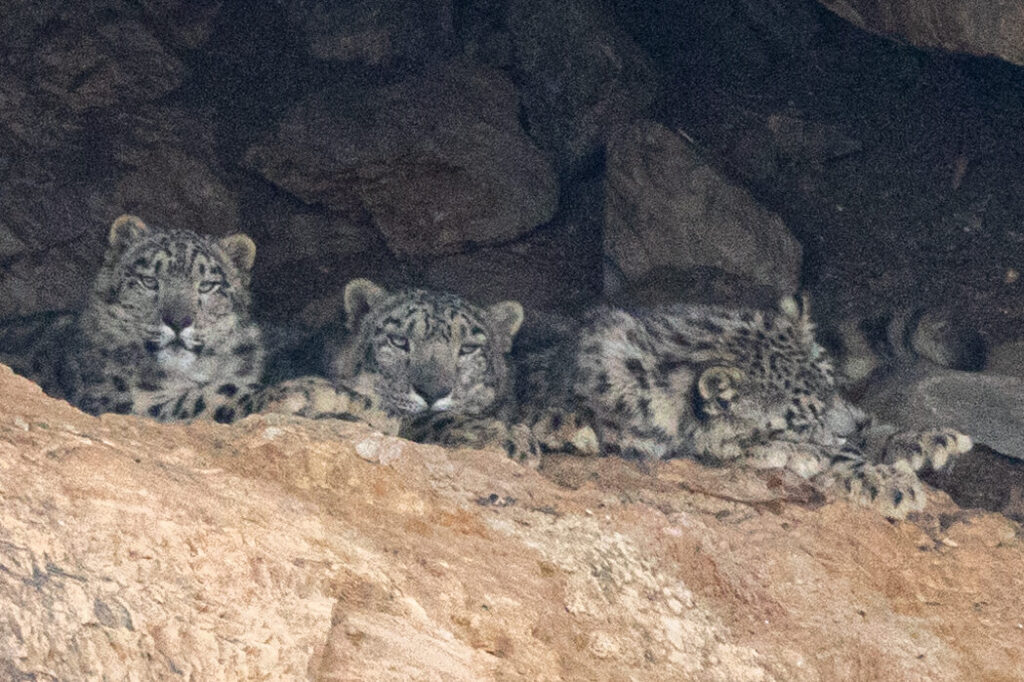
Lest we forget, some amazing predators also roam the hills, mountains and flats of this fragile ecosystem. Mongolia is home to one of the world’s largest populations of Snow Leopards – second only to India. Pallas’ Cats and Eurasian Lynx also roam the grasslands, deserts, and hills. With some luck, you may see Red and Corsac Foxes. Mongolian Wolves also make their home here, but sadly are heavily persecuted and wary of humans. They are much harder to find. But knowing they are here, perhaps watching us from a distance, lends a feeling of even more mystery and magic to this place.
Landscapes & Culture
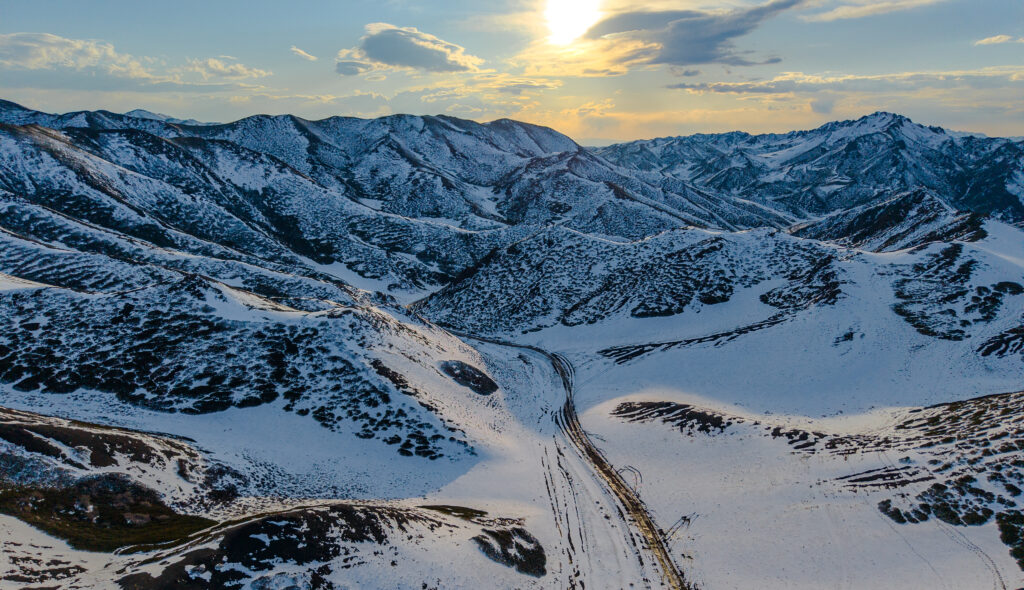
The Three Beauties of the Gobi is a spectacular mountain range in the Gobi Gurvansaikhan National Park. The three main subranges are a spectacular backdrop for the sights and experiences to be had here. And there are plenty. Atop a rocky hill sits the incredible Havtsgait Petroglyphs site, which boasts an impressive collection of early bronze-age rock carvings. The short, but steep hike up to the top is worth it. Large, angular rocks jut out from the grasses and clumps of wild flowers. The drawings etched here represent important aspects of daily life and many of the animals you can still see to this day.
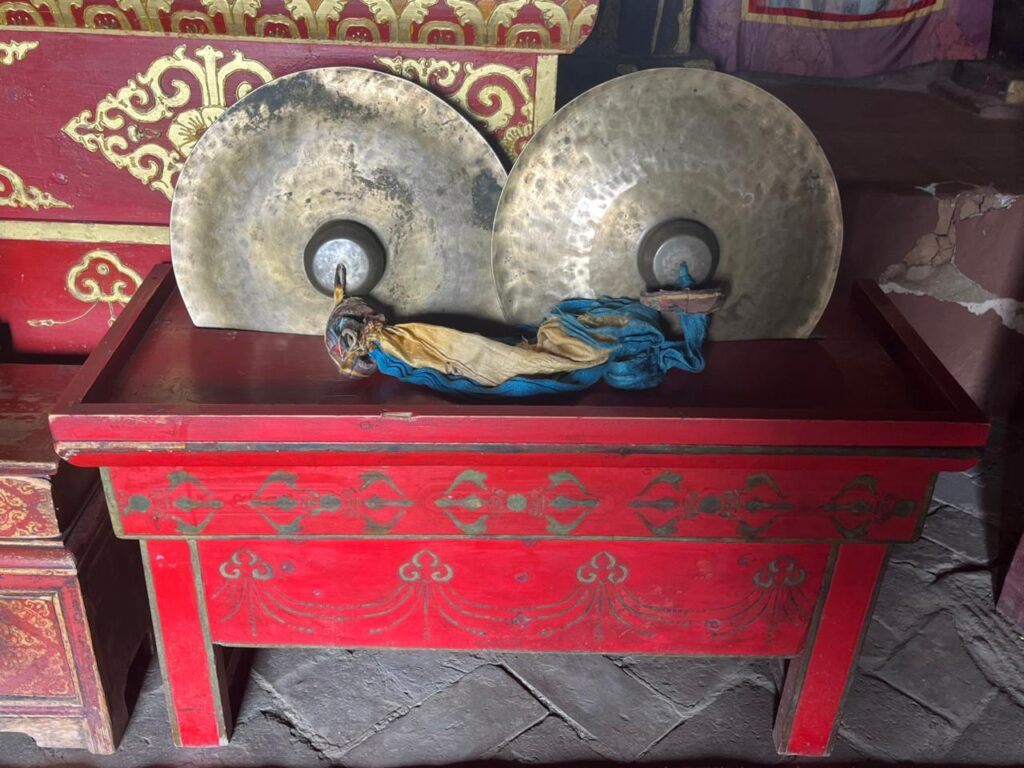
The Ongi Monastery was once one of the largest monasteries in Mongolia. It sat upon the Ongi River, and, once upon a time, nearly 1,000 monks lived here. Sadly, the monastery was completely destroyed in the late 1930’s, and many of the resident monks were killed. Today, a small temple sits among the ruins. It is a reminder of this tragic past. Yes. But it also a beacon of hope and a place for learning and meditation.
Spending time with a nomad family is another amazing experience that awaits you. Share a delicious home-cooked meal, practice combing coats for cashmere, learn how to set up a yurt, or simply enjoy exchanging stories with the host family.
Planning a trip to Mongolia
Whitehawk runs group trips to Mongolia. We can also arrange a private tour for you or your group. We work with a team of amazing local biologists and guides. They, in turn, work to conserve Mongolia’s ecosystems and wildlife, and preserve its unique cultures. Collaborating with nomad families, studying snow leopards with camera traps, and arranging homestays to provide income to families through tourism dollars are just a few of the ways that we can support conservation in this region.