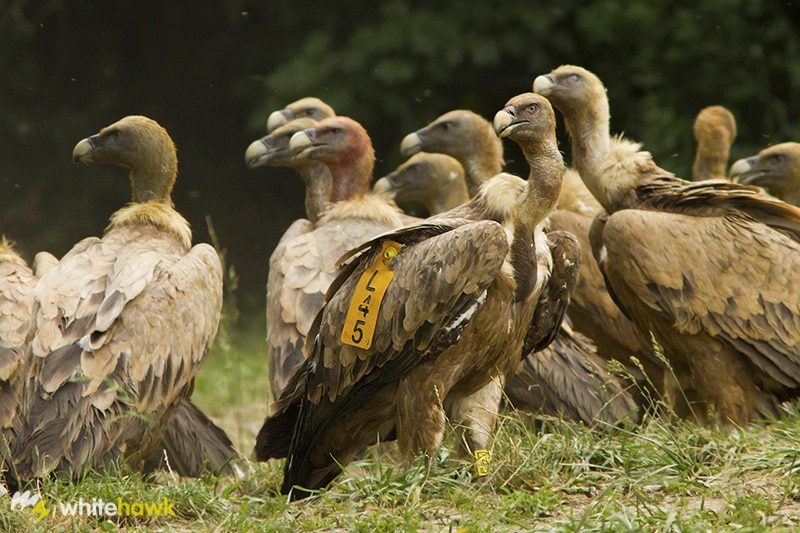
Today I received an e-mail with some information regarding a Black Kite that I saw in Tarifa. The Black Kite had a wing tag. It is a piece of plastic with an alphanumeric code that is attached to the wing of the bird. I promptly took several pictures of it. It was nearly impossible to read the code with binoculars or scope, as the bird was flying and moving fast. But thanks to the pictures we could actually read the code. We sent it to CR-Birding, a European website dedicated to this research. They provide a large database of color rings and researchers working on ringing projects. If you are in North America, there is the Bird Banding Laboratory at the Patuxent Wildlife Research Center. Wildlife photography is now greatly aiding in bird research and conservation.
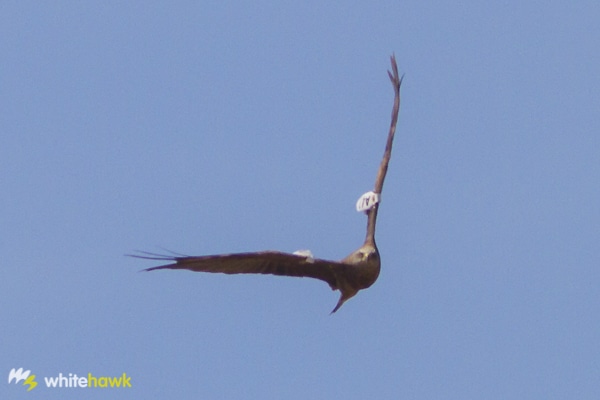
The researcher that worked with the bird I saw responded back and said that the kite was ringed as a young in its nest near a small town called Neu-Jeßnitzl, Germany, in 2010. Even though it’s fascinating to be able to know a small detail of a bird’s life, a single observation might not seem that important from a merely scientific point of view. However, when keeping in mind that this bird might have their ring identified several times throughout their entire lives, then we realize how important this effort is. Hundreds of ornithologists around the world are tagging birds of a multitude of different species.
Benefits of Wildlife Photography
 A small contribution to this process is being able to take pictures of the birds that have a color band or a wing tag. With digital wildlife photography and an increasing number of amateur photographers with long lenses and semi-professional cameras, it’s possible to get more readings on these marks. If you happen to capture a bird with one of these tags in your pictures don’t forget to share them to the reporting centers. Reporting your sightings will help increase the knowledge of the natural history of all bird species. The more we learn about how, where, and when birds move, the better we understand their behavior. This greater understanding allows us to take the most effective conservation measures, such as protecting wintering areas, feeding grounds or migration routes.
Every little bit of information helps!