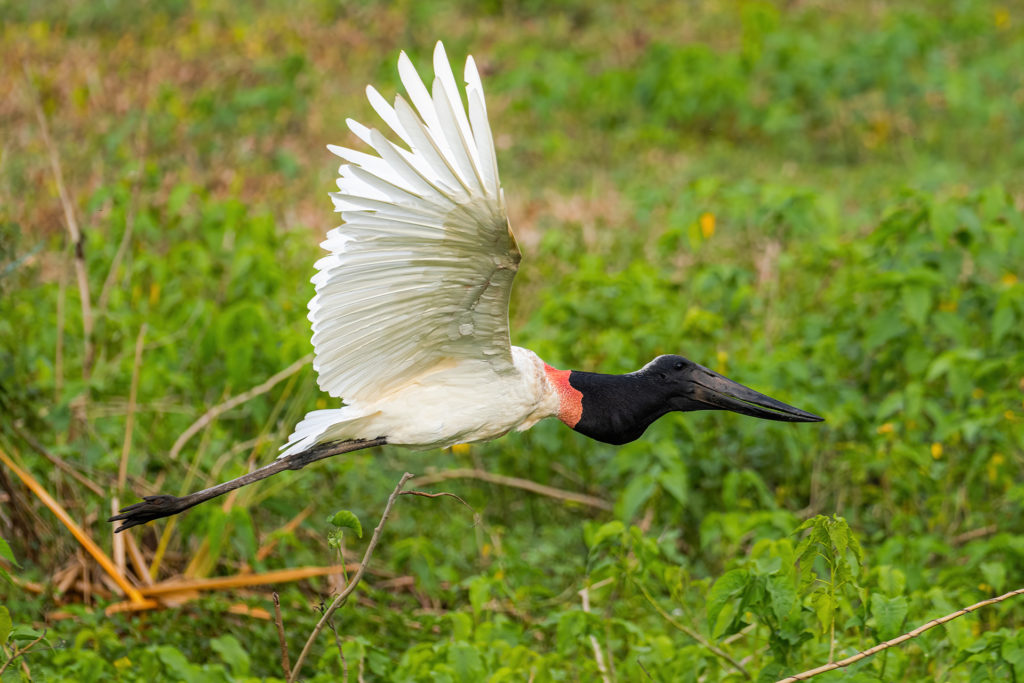
Why Jabirus
We have chosen Jabirus as our Bird in Focus because they are unmistakeable. These impressively large storks have pure white bodies, black legs, a red patch on their necks, black heads and throats, and dark, slightly upturned beaks. Seeing these tall waders foraging in shallow pools makes you feel as if you have suddenly traveled back in time, watching a prehistoric creature on the hunt. Many members of the Whitehawk Birding team worked in Belize as part of The Peregrine Fund’s Orange-breasted Conservation Project. One of many highlights of our time there was getting to see these splendid birds. When lucky, we even spotted them in the wet scrublands along the highway when leaving the international airport.
One of my most memorable sightings of a Jabiru, one of the tallest flying birds in the Americas, was during our first birding tour to Belize in 2014. We were slowly traveling along the New River on our way to visit the Lamanai Reserve. The sunrise was spectacular, with pink clouds reflecting in wide ribbons across the water around our boat. Parrots flew in silhouette above us and howler monkeys called from hidden perches in the distant trees.
Suddenly, we spotted a large, nearly leafless tree standing alone near the edge of the water. Among its branches was an impossibly large jumble of twigs and sticks – a nest! In the nest was a Jabiru. It stood still, seemingly watching us as we slowly motored by. I couldn’t help but wonder – how many, if any, bright white eggs were in the nest? How long until the young would hatch? What does a baby Jabiru look like? Though, in that moment, the answers were not forthcoming, the feeling of wonder at seeing a Jabiru nest for the first time is one I likely won’t soon forget.
Facts about Jabirus
- Jabirus stand nearly 5 feet (122 cm) tall, towering over all of the egrets and herons that share its watery habitats.
- They are found in Neotropical wetlands.
- They feed on aquatic species of all shapes and sizes. Insects, fish, eels, crustaceans, frogs, turtles, and more all make a relatively easy meal for this long-legged bird.
- These birds build massive stick nests high up in palm or emergent trees. Each year, they may add branches and mud to the nests which they use repeatedly.
- Jabiru nests can measure 2 m wide × 1 m deep (over 6 ft wide and 3 ft deep)
- Female Jabirus can lay between 2 to 5 eggs per clutch
- Jabirus are known to sometimes feed on snakes, young caimans and crocodiles
- It has the second largest wingspan of any bird in the Americas (Andean Condor is first)
Where to see Jabirus – Belize
For several of us at Whitehawk, our first glimpes of this incredible bird were at the Crooked Tree Lagoon in Belize. Belize is a small nation found along the Caribbean coast and nestled between Guatemala and Mexico. White sand beaches, deep blue water, coral reefs, rainforests, pine forests, thundering waterfalls, gently-running streams, ancient Mayan sites, and a host of birds, mammals, and other wildlife, make this a top nature-lover’s destination. Our tours often begin at the lovely Crooked Tree Lagoon, and include visits to the splendid Mountain Pine Ridge, La Milpa and Rio Bravo, Cockscomb Basin, Caye Caulker, and more.
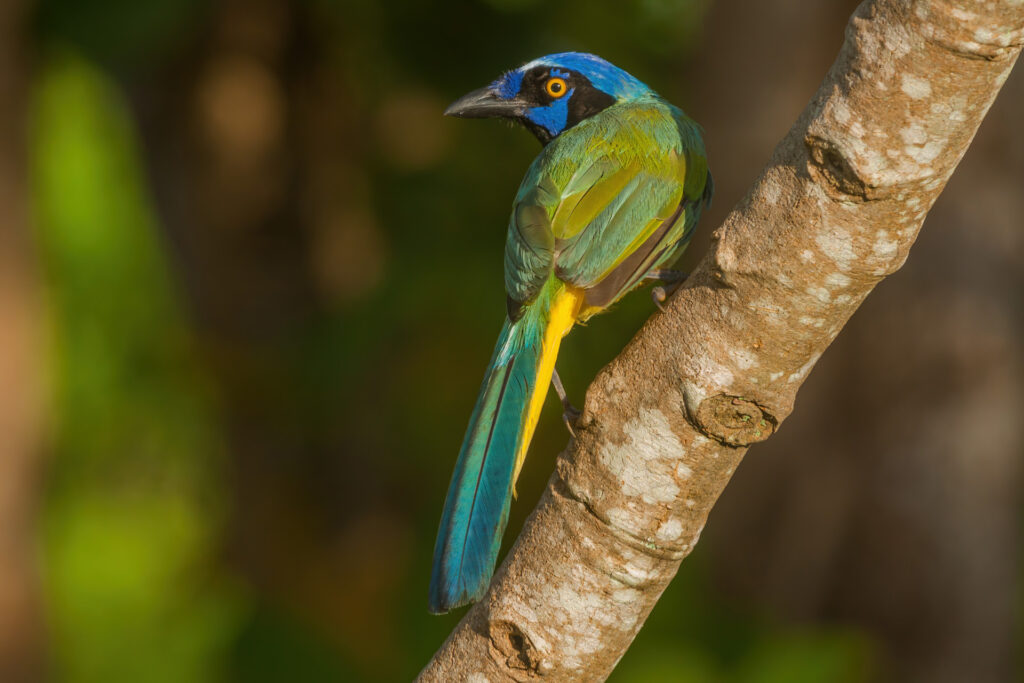
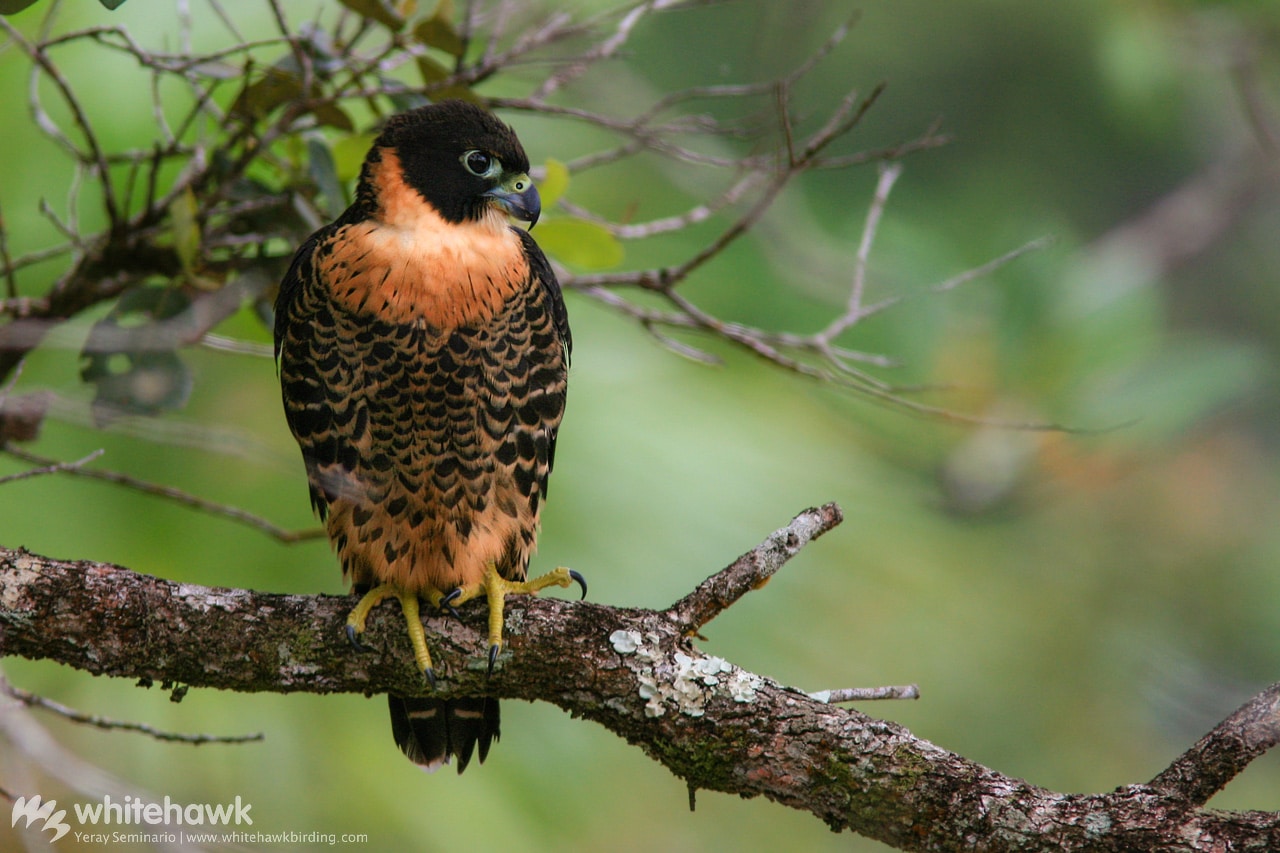
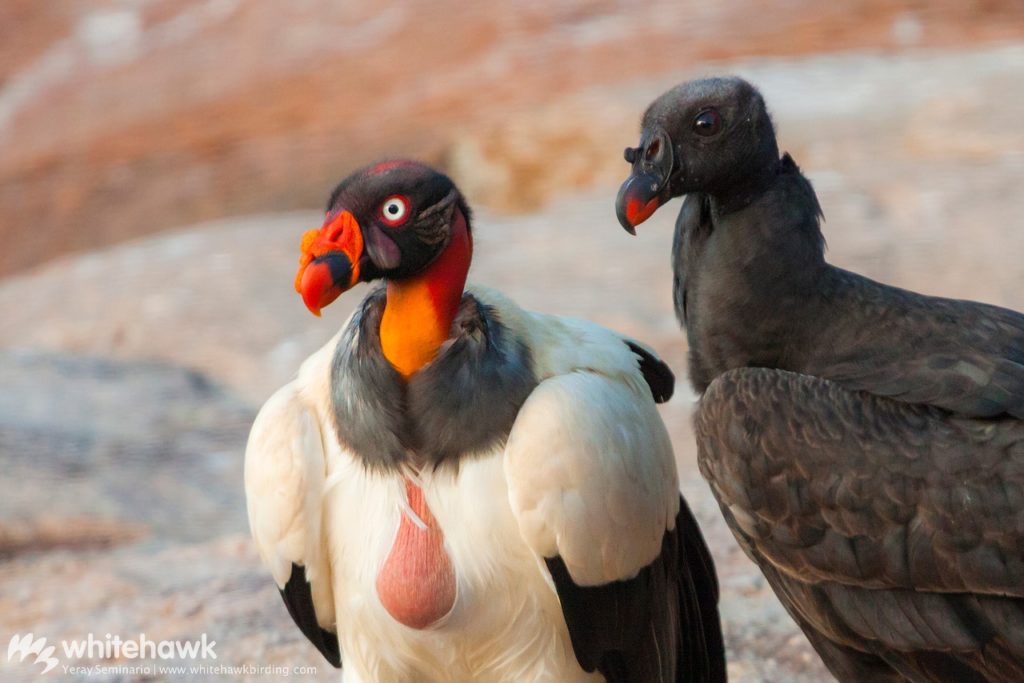
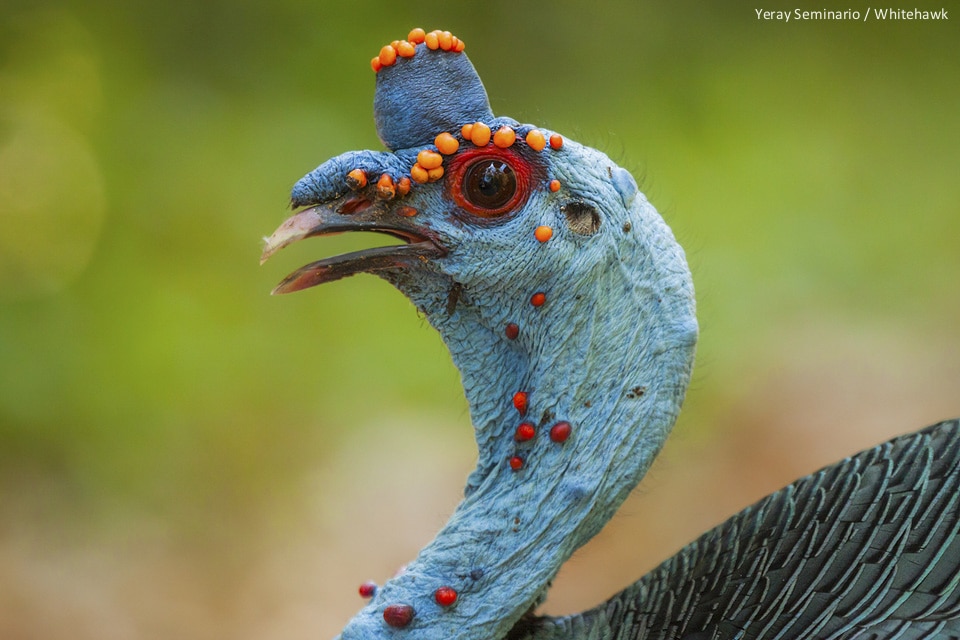
With more than 600 bird species found here, it is hard to pick the highlights, but some are our favorites include Green Jay, Orange-breasted Falcon, King Vulture, and Ocellated Turkey.
Where to see Jabirus – Brazil
Brazil is one of the best places to view birds and mammals in South America. The Pantanal, in particular, is home to thousands of plant species, and a myriad of birds and other wildlife. Our 16-day Brazil Pantanal tour includes wildlife safaris, boat rides, walks and more as we search for macaws, parrots, woodpeckers, manakins, as well as beautiful waterbirds, and more. We will also keep our eyes out for some of the other iconic mammals found here including Black-tailed Marmoset, Southern Tamandua, and Lowland Tapir, just to mention a few.
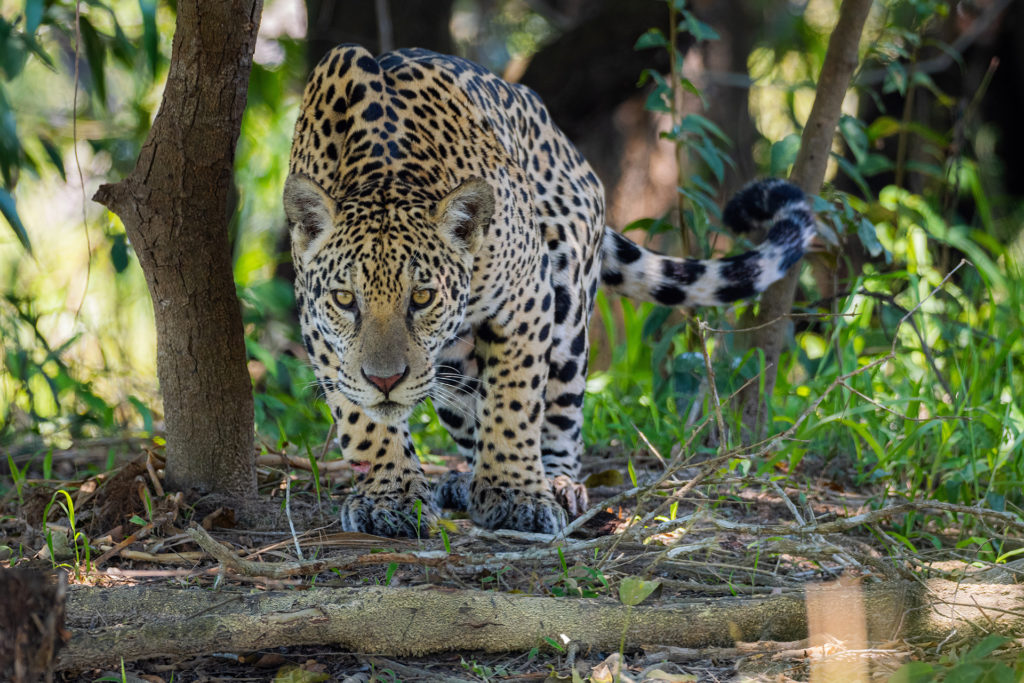
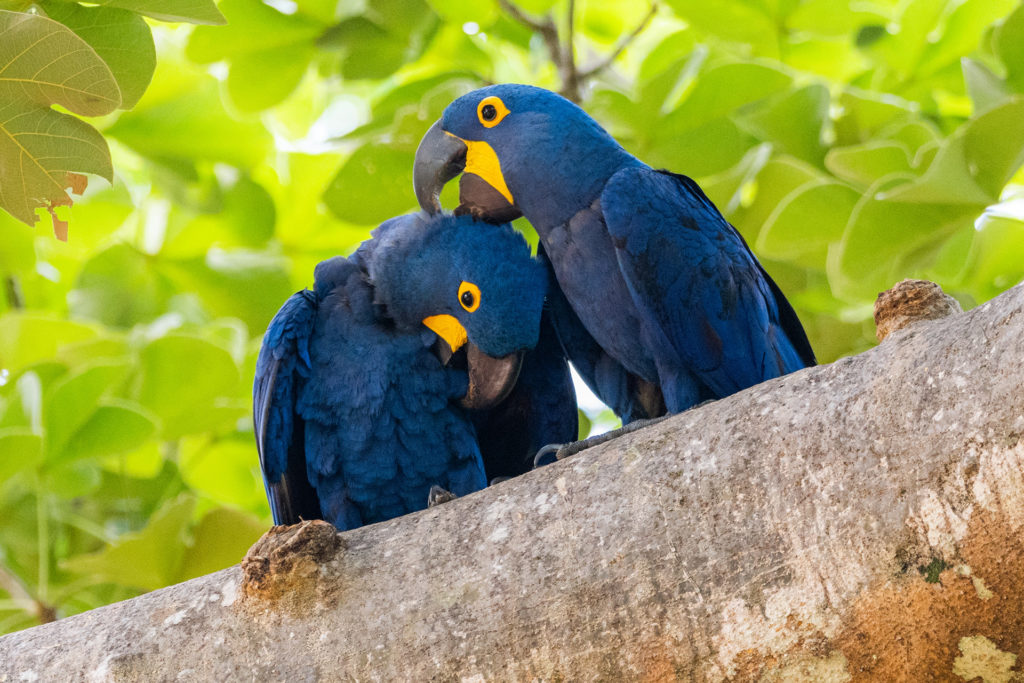
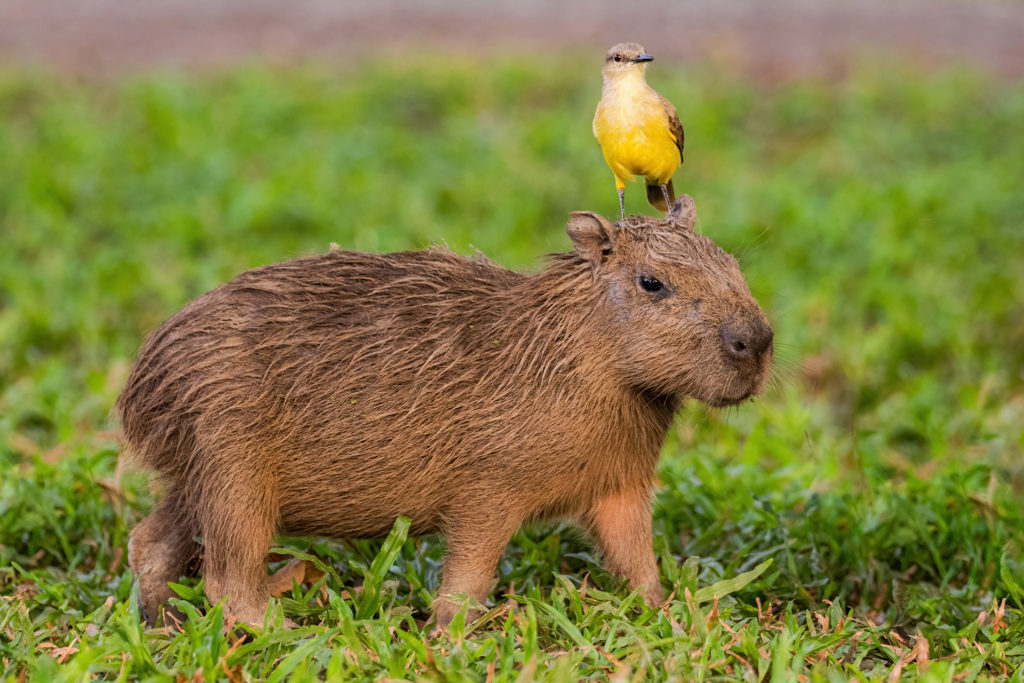
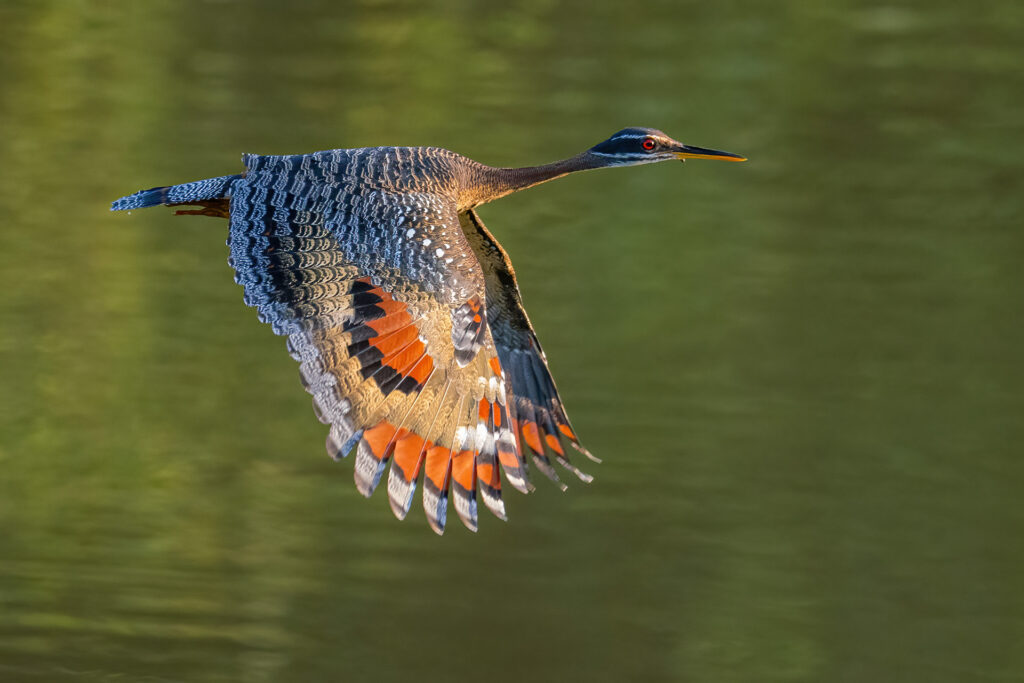
Jaguar, Hyacinth Macaw, Greater Capybara, and Sun Bittern are a few of the species you will see on this trip Brazil’s Pantanal region, one of the largest and biodiverse wetlands in the world.
References:
Elliott, A., E. F. J. Garcia, G. M. Kirwan, and P. F. D. Boesman (2020). Jabiru (Jabiru mycteria), version 1.0. In Birds of the World (J. del Hoyo, A. Elliott, J. Sargatal, D. A. Christie, and E. de Juana, Editors). Cornell Lab of Ornithology, Ithaca, NY, USA. https://doi.org/10.2173/bow.jabiru.01