
Why the Limpkin
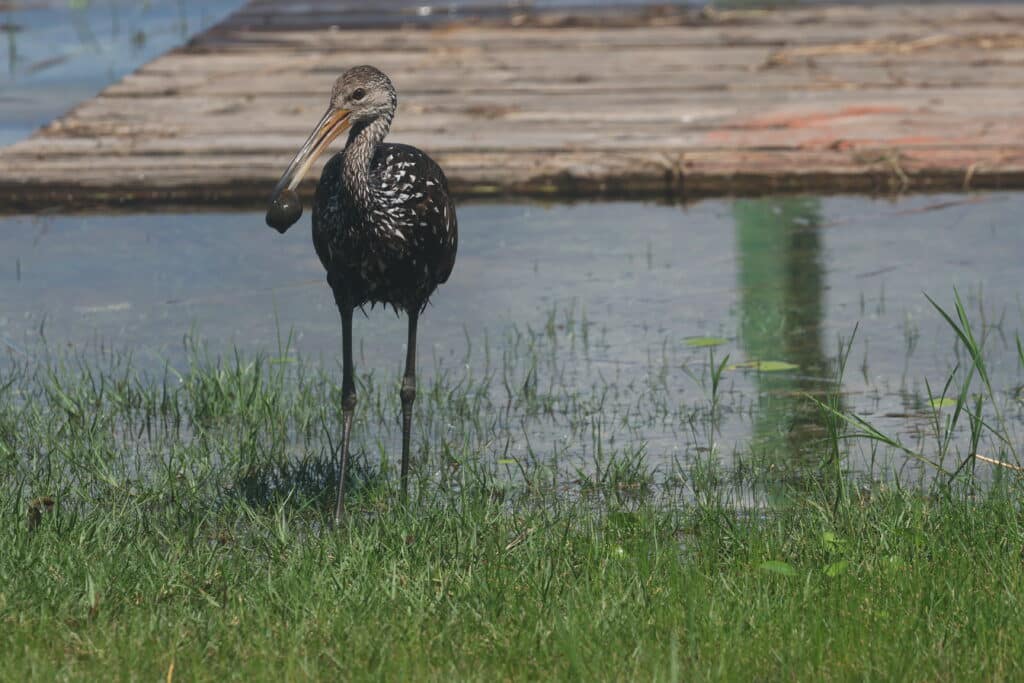
The Limpkin is a lovely waterbird found throughout much of the Americas. We chose the Limpkin as our bird in focus this month because of its curious nature and unique appearance. In Panama, we often see this bird during our boat tours on Gatun Lake. However, it is shy, and we sometimes only get quick glimpses before it flies deeper into the vegetation. In Belize, we have found this bird to be much more accepting of human presence. The photo above was taken from just a few feet away at Crooked Tree Wildlife Sanctuary, as we watched the bird wade back and forth into the water to hunt for snails.
At first glance, this bird might seem plain, but upon closer inspection, it is quite lovely. The silvery spots on its neck, its gradient-colored beak, and its sleek feathers make it a truly beautiful bird. It also exhibits some unique behaviors, which you can read more about below.
Some facts about Limpkins
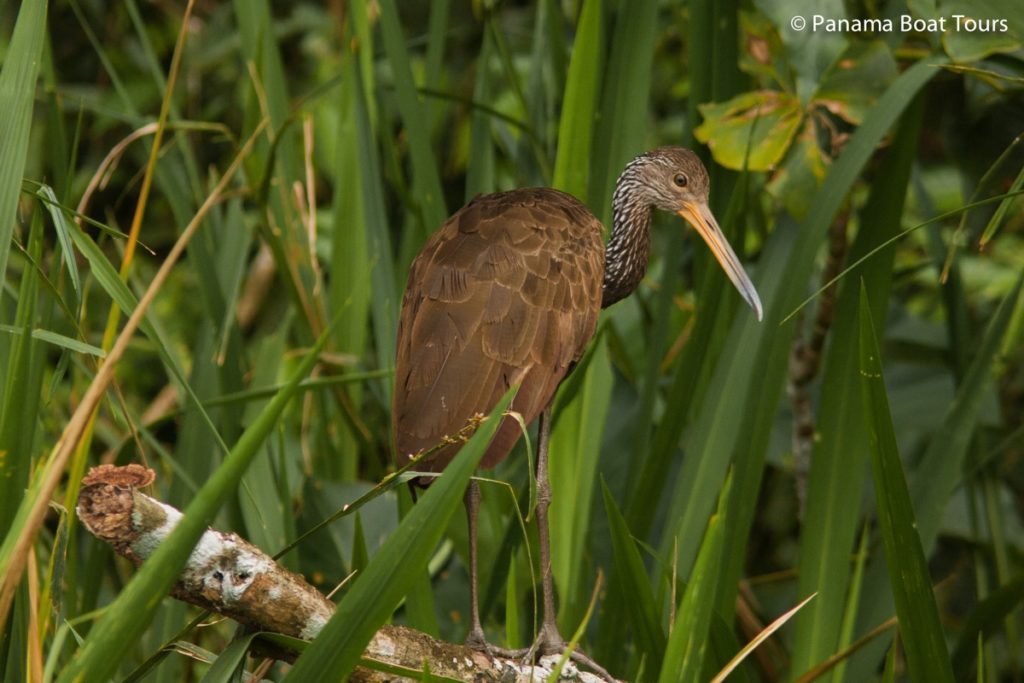
- This large bird feeds mostly on apple snails (Pomacea spp.). The slight bend and twist in their beaks allow them to remove the snails without breaking the shells.
- In some parts of the Caribbean and Latin America, locals call the Limpkin “carao”, an onomatopoeia of its call.
- Apart from Apple Snails, it will also feed on other snails, mussels, mollusks, lizards, worms, insects, frogs, and crustaceans.
- Limpkins may choose from a wide variety of nesting sites, including old nests built by other birds, on the ground, in tree cavities, on floating vegetation, or in bushes. They prefer to nest near water.
- Limpkins build their nests using large sticks, leaves, stalks, grasses, moss, and other vegetation. The female may lay up to 7 or 8 eggs, and both parents incubate.
- Apart from building a nest, these birds also construct a brooding platform, where the young can stay together and seek shelter, after they are old enough to leave the nest.
- Limpkins have relatively long toes, which help them to balance and distribute their weight when walking on floating plants.
- These long-legged birds are adept at climbing trees and can also swim.
Where to see Limpkins
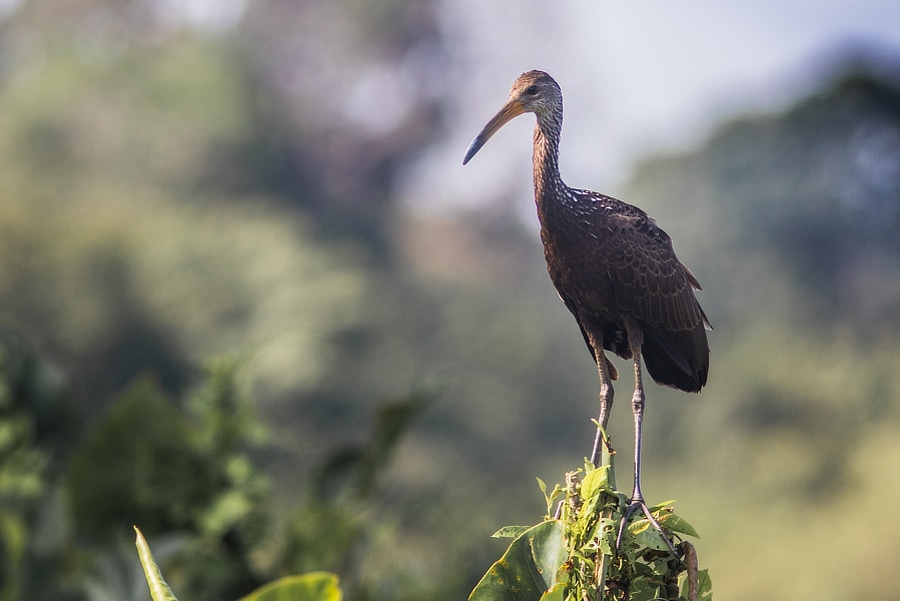
Located about 30 minutes from Panama City, Panama, is the lovely Gatun Lake. A tour by boat begins with a short ride through the Panama Canal, where you may pass large tankers, cruise ships, or other boats passing through this world-famous waterway. This is a wonderful way to spend a morning in search of some of Panama’s most common wildlife. Three species of monkeys, several species of reptiles, and some other mammals such as sloths, coatimundis or coyotes can sometimes be seen from the water. Birds found here include Magnificent Frigatebird, Red-lored Parrot, Keel-billed Toucan, Greater Ani, Purple Gallinule, Wattled Jacana, and more.
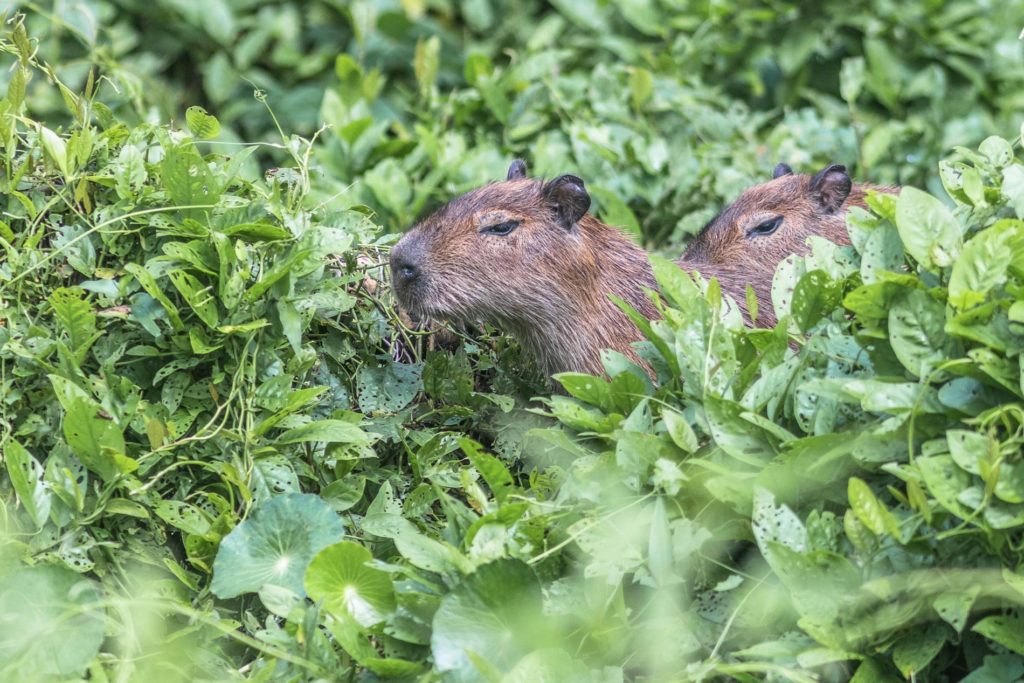
Though harder to see, we sometimes get lucky and spot Lesser Capybaras during a boat tour, or in the Gamboa area, often during dawn and dusk.
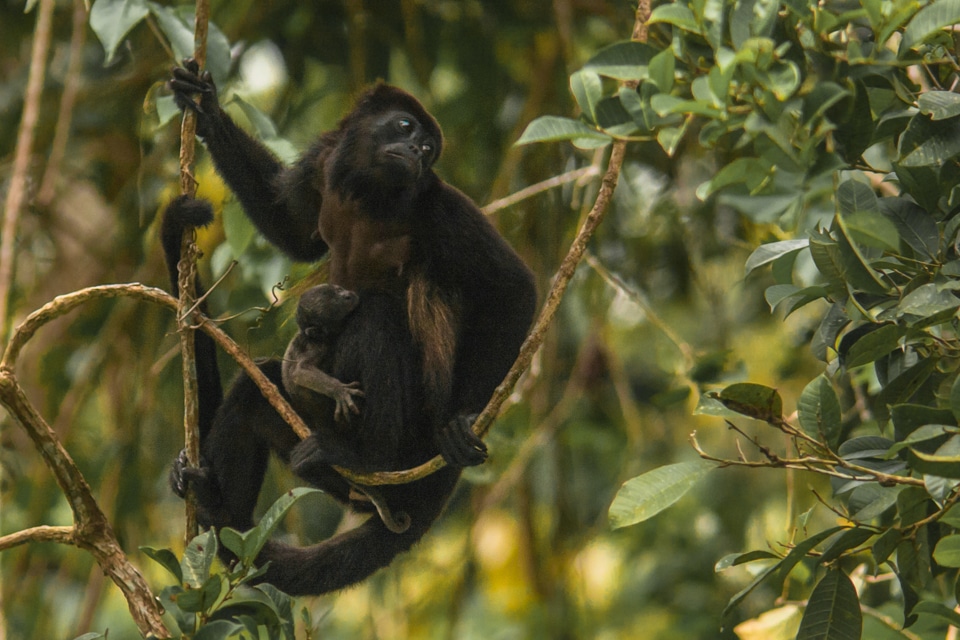
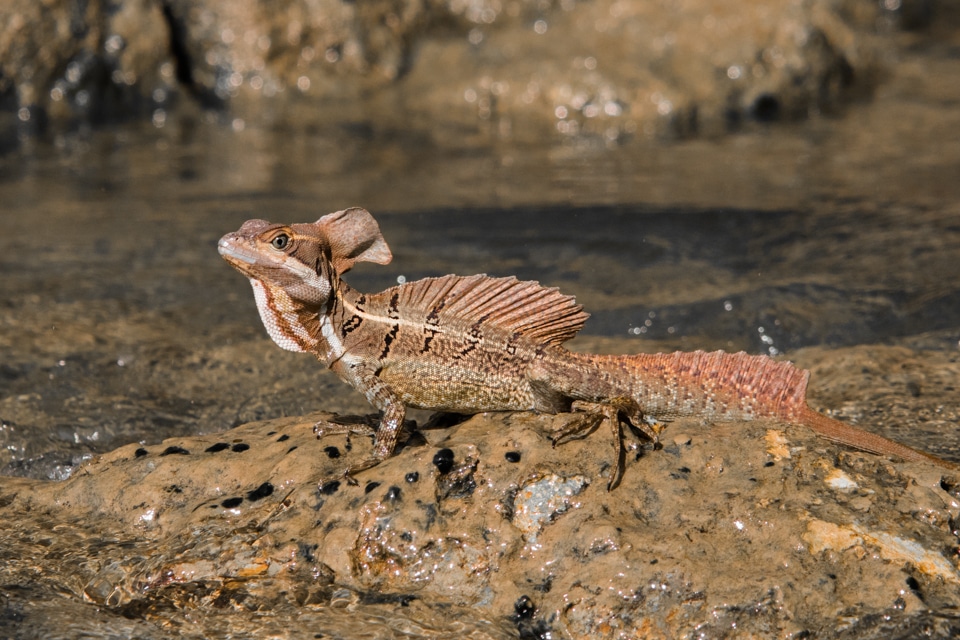
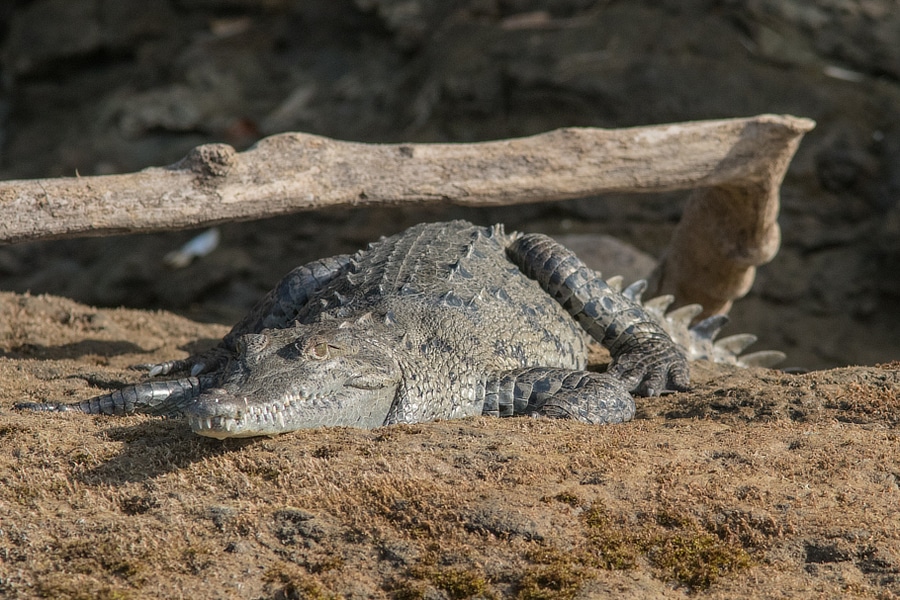
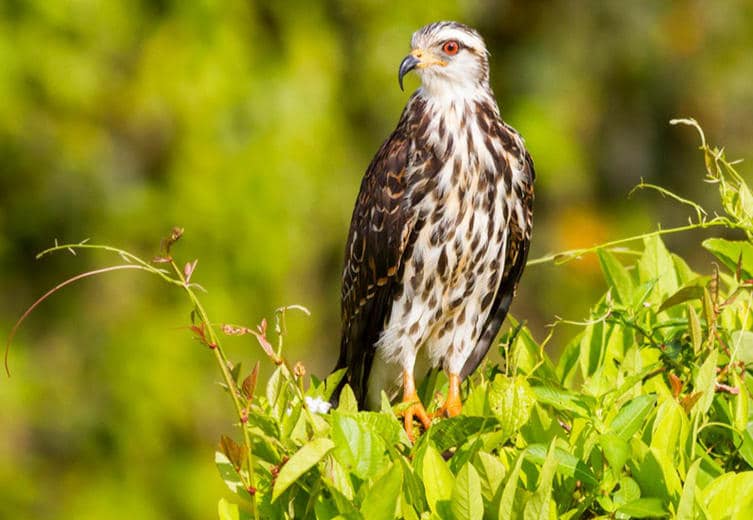
Other species more commonly seen on the lake include basilisk lizards, snail kites, howler monkeys, and American crocodiles.
In Belize, one of the best places to see this lovely bird is at the Crooked Tree Wildlife Sanctuary. Located less than an hour from the international airport, the sanctuary is a wonderful place to start any trip to Belize. Spending a few nights here will give you the opportunity to explore the trails and roads that meander through the sanctuary and the nearby quaint town of Crooked Tree. A surprising variety of habitats – from lagoons and marshes, to pine forests and backyard gardens – await you. This variety of habitats attracts a number of bird species. Water birds are attracted to the lagoon, but many forest and open habitat species can also be found here. Vermillion Flycatchers are a common sight. We can also find Bat Falcon, Green-breasted Mango, White-fronted Amazon, Ferruginous Pygmy-owl, Spot-breasted Wren, Yucatan Woodpecker, and so many more birds.
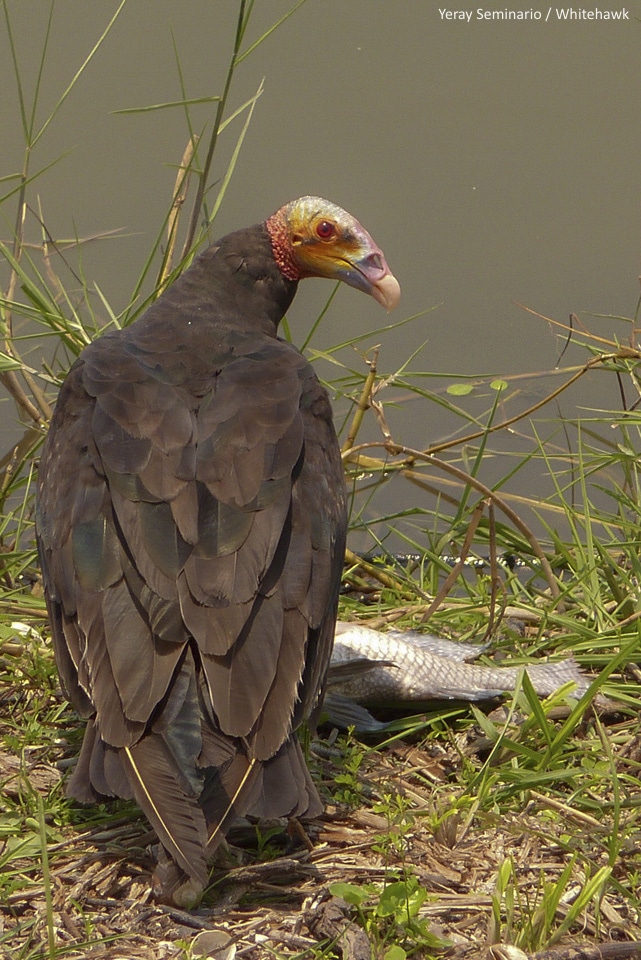
We can frequently see Lesser Yellow-headed Vultures soaring over or perched in the trees at this wildlife sanctuary.
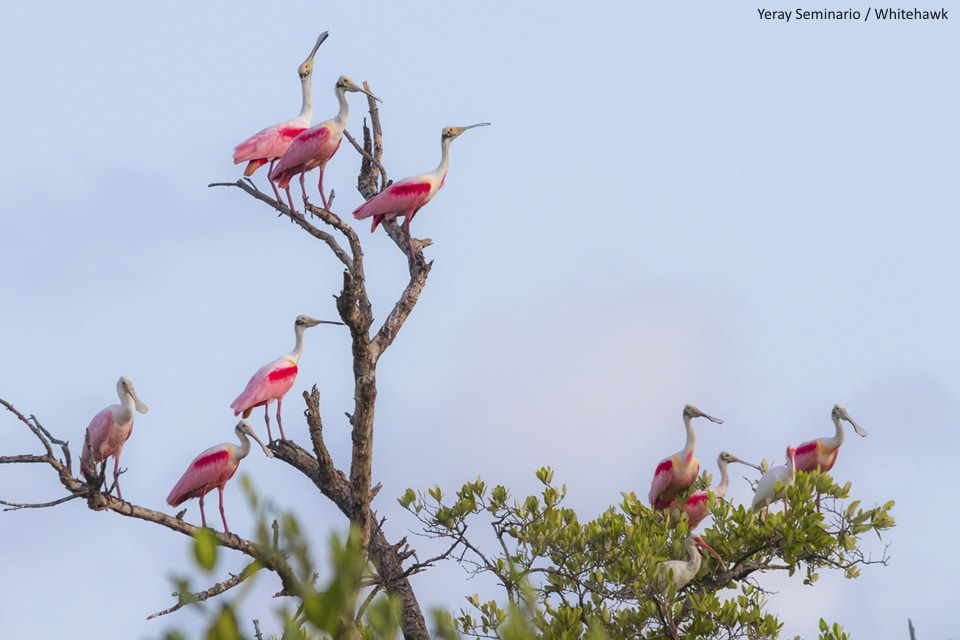
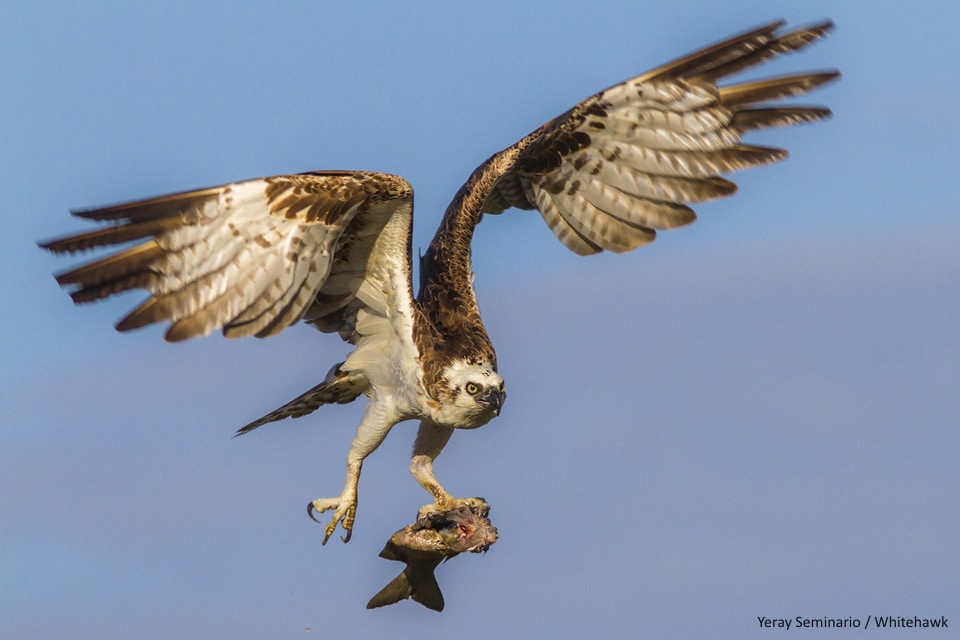
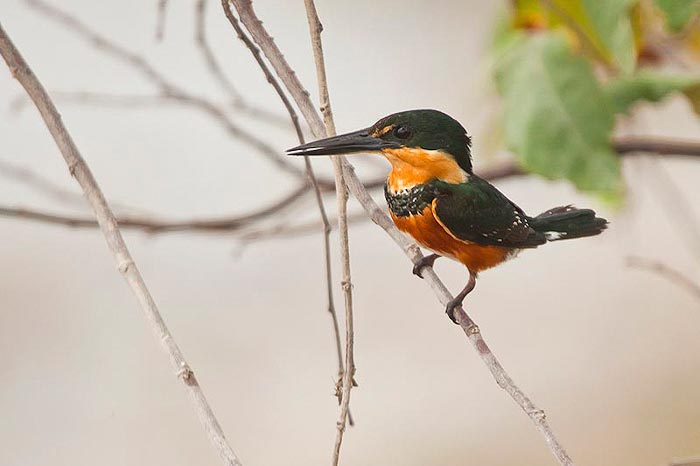
Other birds at Crooked Tree include American Pygmy Kingfishers, Agami Herons, Jabiru, Roseate Spoonbills, Osprey (the Caribbean subspecies), and more.
To learn more about our tours to Panama, Belize, or elsewhere, please contact us at any time. We would be happy to answer any questions you might have and help you organize a trip of a lifetime.

References:
Bryan, D. C. (2020). Limpkin (Aramus guarauna), version 1.0. In Birds of the World (A. F. Poole and F. B. Gill, Editors). Cornell Lab of Ornithology, Ithaca, NY, USA. https://doi.org/10.2173/bow.limpki.01